
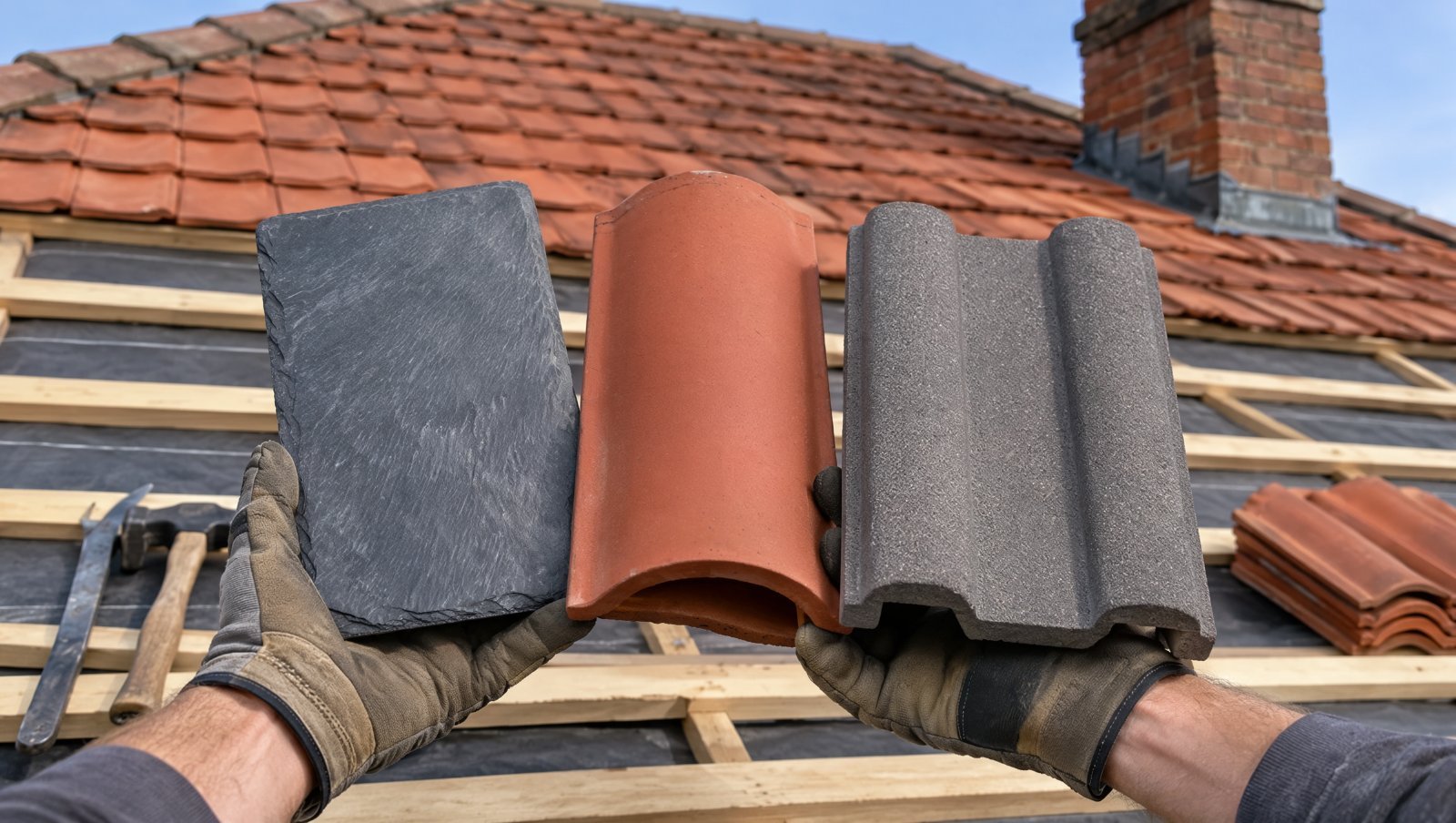
Quick answer: The main types of roofing materials on UK homes are concrete tiles, clay tiles, natural slate, metal, shingles and flat roof systems such as EPDM, GRP and felt. Concrete tiles are the most affordable pitched option. Natural slate lasts longest. For flat roofs, GRP and EPDM outlast traditional felt.
Key Takeaways
- Concrete tiles are the most common and budget-friendly choice on UK homes.
- Natural slate costs more but can last over a century.
- Many Bristol Victorian terraces have original Welsh slate roofs.
- For flat roofs, GRP and EPDM last two to three times longer than felt.
Your roof is your home’s main defence against the weather. The material you choose affects how long it lasts, how much maintenance it needs, how it looks and what it costs over its lifetime.
We are Experienced Roofers Ltd, and we provide new roof installation in Whitchurch and across the surrounding areas of Bristol. In this guide we compare the most common roofing materials in the UK, with lifespans, typical costs and where each works best.
What Are the Main Types of Roofing Materials?
Roofing materials fall into two groups. Pitched roofs use tiles, slate, metal or shingles, which overlap so rain runs off. Flat roofs use a continuous waterproof covering, such as EPDM rubber, GRP fibreglass or felt. Concrete tiles, clay tiles and natural slate cover most pitched roofs in the UK, while EPDM and GRP are now the most popular flat roof choices.
Types of Roof Tiles and Pitched Roofing Materials
Each pitched roofing material below is set out the same way, so you can compare them easily: what it is, how long it lasts, what it costs fitted, its pros and cons, and the homes it suits best.
Concrete roof tiles
Concrete tiles are the most common roof covering on UK homes built from the 1950s onwards, including many houses in Whitchurch, Hengrove and Stockwood. They come in interlocking profiles that are quick to lay.
- Lifespan: 40 to 60 years
- Fitted cost: about £90 to £120 per m²
- Pros: affordable, strong, quick to fit, wide choice of colours
- Cons: heavy, colour fades, moss grows easily on the rough surface
- Best for: most post-war and modern homes
Clay roof tiles
Clay tiles are fired from natural clay and come as small plain tiles or larger interlocking tiles. They keep their colour for decades and suit traditional and character homes.
- Lifespan: 60 to 100 years
- Fitted cost: about £110 to £160 per m²
- Pros: long life, keeps its colour, fire resistant, low maintenance
- Cons: costs more than concrete, can crack if walked on, needs skilled fitting
- Best for: period homes, cottages and homes where matching the original roof matters
Natural slate
Natural slate is split from quarried stone and is one of the longest-lasting roofing materials. Much of Bristol’s Victorian housing, in areas like Knowle, Brislington and Totterdown, was originally roofed in Welsh slate.
- Lifespan: 75 to 150 years
- Fitted cost: about £150 to £220 per m²
- Pros: very long life, natural look, low maintenance, adds value to period homes
- Cons: expensive, heavy, needs a specialist roofer
- Best for: Victorian and Edwardian terraces, conservation areas and high-value homes
Fibre cement and synthetic slate
Fibre cement and composite slates are man-made alternatives designed to look like natural slate at a lower cost and weight.
- Lifespan: 30 to 50 years
- Fitted cost: about £80 to £130 per m²
- Pros: cheaper and lighter than natural slate, consistent size and colour
- Cons: shorter life, can fade, not always accepted in conservation areas
- Best for: new builds, extensions and budget slate-look roofs
Metal roofing
Metal roofs use steel, aluminium or zinc, either as standing-seam sheets or as profiled tiles that look like traditional roofing.
- Lifespan: 40 to 70 years
- Fitted cost: about £70 to £120+ per m²
- Pros: light, strong, handles heavy rain and wind, low maintenance, recyclable
- Cons: higher upfront cost for premium metals, can be noisy in rain without good insulation
- Best for: modern homes, extensions, garden rooms and outbuildings
Roof shingles
Shingles are less common on UK houses than in the USA, but asphalt shingles are popular on sheds, garages, summerhouses and some extensions. Learn more in our guide on what roof shingles are.
- Lifespan: 15 to 30 years for asphalt
- Fitted cost: about £50 to £100 per m²
- Pros: light, cheap and easy to fit
- Cons: shortest life of the pitched options, can lift in high winds
- Best for: garages, sheds, garden rooms and budget projects
Flat Roofing Materials
Flat roofs on extensions, garages and dormers need a continuous waterproof covering. The three main options in the UK are EPDM rubber, GRP fibreglass and felt.
EPDM rubber
EPDM is a synthetic rubber membrane laid in large single sheets, so there are very few joins. Read our guide on what EPDM roofing is.
- Lifespan: 20 to 30+ years
- Fitted cost: about £60 to £100 per m²
- Pros: flexible, few seams, low maintenance, easy to repair
- Cons: usually black only, can be punctured by sharp objects
- Best for: extensions, garages and dormers
GRP fibreglass
GRP is a glass-reinforced resin laid wet over a timber deck, then finished with a coloured topcoat. It cures into a hard, seamless surface.
- Lifespan: 25 to 40 years
- Fitted cost: about £70 to £120 per m²
- Pros: seamless, very strong, walkable, choice of colours
- Cons: can crack if the building moves, needs dry weather to lay
- Best for: balconies, roofs you walk on and extensions
Felt
Modern felt roofs use two or three layers of bitumen membrane, either torch-on or cold-bonded, with a mineral top sheet.
- Lifespan: 10 to 15 years for basic felt, 20+ years for quality torch-on systems
- Fitted cost: about £40 to £70 per m²
- Pros: cheapest upfront, familiar to most roofers
- Cons: shortest life, more seams, prone to blistering and cracking with age
- Best for: garages, sheds and short-term budget roofs
For a full comparison, read our guide to the best flat roof material in the UK. Our flat roofing services in Whitchurch cover all three systems.
Roofing Materials UK Comparison Table
This table compares the roofing types side by side. Prices are UK guide figures for supply and fit, and vary with roof size, access and design.
| Material | Roof type | Typical lifespan | Fitted cost per m² | Best for |
|---|---|---|---|---|
| Concrete tiles | Pitched | 40 – 60 years | £90 – £120 | Most modern and post-war homes |
| Clay tiles | Pitched | 60 – 100 years | £110 – £160 | Traditional and character homes |
| Natural slate | Pitched | 75 – 150 years | £150 – £220 | Victorian terraces and period homes |
| Fibre cement or synthetic slate | Pitched | 30 – 50 years | £80 – £130 | New builds and extensions |
| Metal | Pitched or low pitch | 40 – 70 years | £70 – £120+ | Modern homes and outbuildings |
| Asphalt shingles | Pitched | 15 – 30 years | £50 – £100 | Sheds, garages, garden rooms |
| EPDM rubber | Flat | 20 – 30+ years | £60 – £100 | Extensions and dormers |
| GRP fibreglass | Flat | 25 – 40 years | £70 – £120 | Balconies and extensions |
| Felt | Flat | 10 – 20 years | £40 – £70 | Garages and sheds |
For repair prices, see our guide to roof repair costs in Bristol.
How Do You Choose the Right Roofing Material?
Choose based on your home’s style and structure, your budget, how long you plan to stay, local planning rules and how much maintenance you want. Matching the original material is usually best on period properties and is often required in conservation areas.
- Property style: slate or clay for period homes, concrete for most modern homes.
- Roof structure: heavy materials need a strong roof frame, so changing from slate to concrete may need a structural check.
- Budget and lifespan: compare the cost per year of life, not just the upfront price.
- Planning: conservation areas in Bristol may restrict changes to roof materials.
- Weather: Bristol’s wet, windy climate rewards good fixings and well-laid tiles.
Planning a new roof? See our new roof installation in Whitchurch service.
Want a professional to take a look? Our team also offers flat roofing in Whitchurch, with a free survey and a fixed written price.
For independent guidance, see the NFRC guide to finding a roofing contractor.
Roof shape matters as much as material when something goes wrong. Our repair guides cover the most common UK shapes, including how to fix a gable roof, how to fix a hip roof and how to fix a mansard roof.
Frequently Asked Questions
What is the most durable roofing material?
Natural slate is one of the most durable, often lasting over 100 years with good maintenance. Clay tiles come a close second.
What is the cheapest roofing material for a pitched roof?
Concrete tiles are usually the cheapest long-lasting option for a pitched roof in the UK.
Can I change my roof from slate to concrete tiles?
Often yes, but concrete tiles are heavier, so the roof structure must be checked. If you live in a conservation area or listed building, you may need permission. Check with Bristol City Council.
Are metal roofs a good choice for homes?
Yes. Metal roofs are strong, light, long-lasting and low maintenance. They suit modern homes and extensions especially well.
How do I choose the right roofing material?
Think about your budget, the style of your home, local planning rules and how much maintenance you want. A roofer can inspect your roof and recommend the best fit.
Choosing a Material for Your Roof?
We fit tiles, slate, metal and flat roof systems, so our advice is not tied to one product. Tell us about your home and budget, and we will give you honest options with prices. Call 0117 345 9991 or book a free survey. See our new roof installation in Whitchurch page and our roofers in Whitchurch.

Phillip Holland is the founder of Experienced Roofers Ltd, bringing 30 years of roofing and construction expertise to homeowners across Wiltshire. A certified roofer who has overseen hundreds of projects, Phillip writes to demystify roofing problems, covering everything from spotting early leak damage to choosing the right roofing material and knowing when it’s time to call a professional.