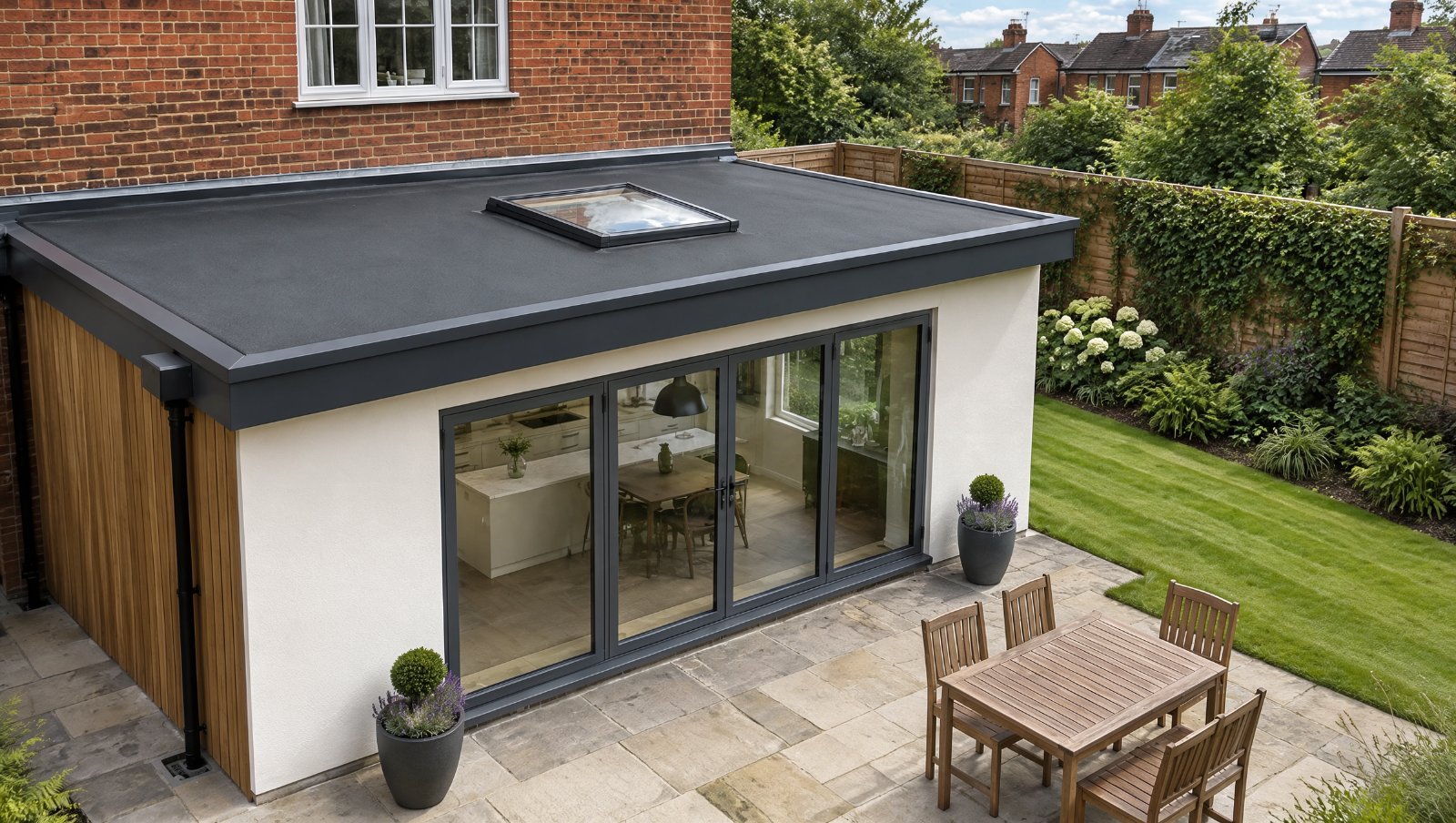
Quick answer: What is EPDM roofing? It is a flat roof covering made from a synthetic rubber, ethylene propylene diene monomer, laid in large sheets with few or no joins. An EPDM rubber roof is flexible, waterproof and low maintenance. How long does an EPDM roof last? Typically 20 to 30 years or more.
Key Takeaways
- EPDM is a single-sheet rubber membrane, so there are few seams to leak.
- It stays flexible in heat and cold, so it resists cracking.
- It costs more than felt but lasts much longer.
- Most EPDM is black, and it must be fitted well to perform.
EPDM rubber roofing has become one of the most popular flat roof systems in the UK. You will see it on extensions, garages, dormers and garden rooms all over Bristol.
We are Experienced Roofers Ltd, and we install flat roofing in Whitchurch and across the surrounding areas of Bristol. This guide explains what EPDM is, how it works, its pros and cons, and how it compares with other flat roof materials.
What Is EPDM Roofing Made From?
EPDM stands for ethylene propylene diene monomer, a synthetic rubber. It is strong, flexible and resistant to UV, ozone and weather. It is made in large sheets, so a typical garage or extension roof can often be covered with one piece and no joins.
Where Is EPDM Roofing Used?
EPDM is used on flat and low-pitched roofs, including house extensions, garages, porches, dormers, garden rooms, carports and commercial buildings. Its flexibility means it can also cover awkward shapes.
How Is an EPDM Roof Installed?
On homes, EPDM is usually fully adhered, meaning it is glued to a solid deck such as OSB. On larger commercial roofs it can also be mechanically fixed or held down with ballast. Edges are finished with trims and upstands are bonded to walls, with flashing over the top.
- Fully adhered: glued to the deck. Most common on homes.
- Mechanically fixed: held with fasteners. Common on large roofs.
- Ballasted: held down with stones or slabs. Used on some commercial roofs.
What Are the Advantages of EPDM Roofing?
EPDM’s main benefits are long life, waterproof single-sheet coverage, flexibility in all temperatures, low maintenance and simple repairs.
- Long life: typically 20 to 30+ years, with some premium membranes rated for longer.
- Fewer joins: large sheets mean fewer seams and fewer weak points.
- Flexible: stretches with temperature changes without cracking.
- Low maintenance: needs no coatings, just occasional checks and cleaning.
- Easy repairs: small tears can be patched with EPDM primer and tape.
What Are the Disadvantages of EPDM Roofing?
EPDM costs more than felt, is usually only available in black, can be punctured by sharp objects and depends heavily on good installation. Poorly bonded edges or bad falls can cause problems.
- Higher upfront cost than felt
- Limited colour choice, usually black
- Can be punctured by dropped tools or branches
- Must be fitted carefully, especially at edges, outlets and upstands
How Does EPDM Compare With Other Flat Roof Materials?
EPDM lasts longer than felt and is more flexible than GRP. GRP gives a hard, walkable finish but can crack if the building moves. Felt is cheapest but wears out fastest.
| Material | Cost per m² | Typical lifespan | Key strengths |
|---|---|---|---|
| EPDM rubber | £70 – £90 | 20 – 30+ years | Flexible, few seams, low maintenance |
| GRP fibreglass | £80 – £110 | 25 – 40 years | Hard, seamless, walkable, colour options |
| Felt | £50 – £70 | 10 – 15 years | Cheapest upfront |
| Single-ply PVC/TPO | £75 – £100 | 20 – 30 years | Light, good for large roofs |
For a full comparison, see our guide to the best flat roof material in the UK. For prices, read our flat roof replacement cost guide.
Is EPDM Right for Your Bristol Home?
EPDM is a great choice for most extensions, garages and dormers, especially where the roof is hidden from view or a flexible, long-lasting membrane is wanted. If you plan to walk on the roof or want a coloured finish, GRP may suit better. Our City & Guilds qualified team fits EPDM roofs across Whitchurch, Bristol and the surrounding areas. See our flat roofing services in Whitchurch.
For independent guidance, see the NFRC guide to finding a roofing contractor.
For small splits and holes in a rubber roof, our guide on how to fix a flat roof covers EPDM patching step by step.
Frequently Asked Questions
What does EPDM stand for?
Ethylene propylene diene monomer, a synthetic rubber used for roofing membranes.
How long does an EPDM roof last?
Typically 20 to 30 years or more when properly installed and maintained. Some manufacturers rate premium membranes for up to 50 years.
What are common problems with EPDM roofs?
Most problems come from poor installation, such as loose edges, poorly sealed outlets or ponding water. Punctures can happen but are usually simple to repair.
Can you walk on an EPDM roof?
Light foot traffic for maintenance is fine, but EPDM is not designed as a walkway or terrace without protection.
Can EPDM be fitted over an old felt roof?
It is usually better to strip the old felt and check the deck first, so any rot or damp can be fixed before the new membrane goes on.
Considering a Rubber Roof for Your Extension?
We fit EPDM in single sheets wherever we can, with bonded upstands and proper edge trims, so there are fewer joins to fail. We will check the deck first and replace any soft boards. Call 0117 345 9991 or ask for a quote. See our flat roofing in Whitchurch page and our roofers in Whitchurch.

Phillip Holland is the founder of Experienced Roofers Ltd, bringing 30 years of roofing and construction expertise to homeowners across Wiltshire. A certified roofer who has overseen hundreds of projects, Phillip writes to demystify roofing problems, covering everything from spotting early leak damage to choosing the right roofing material and knowing when it’s time to call a professional.