
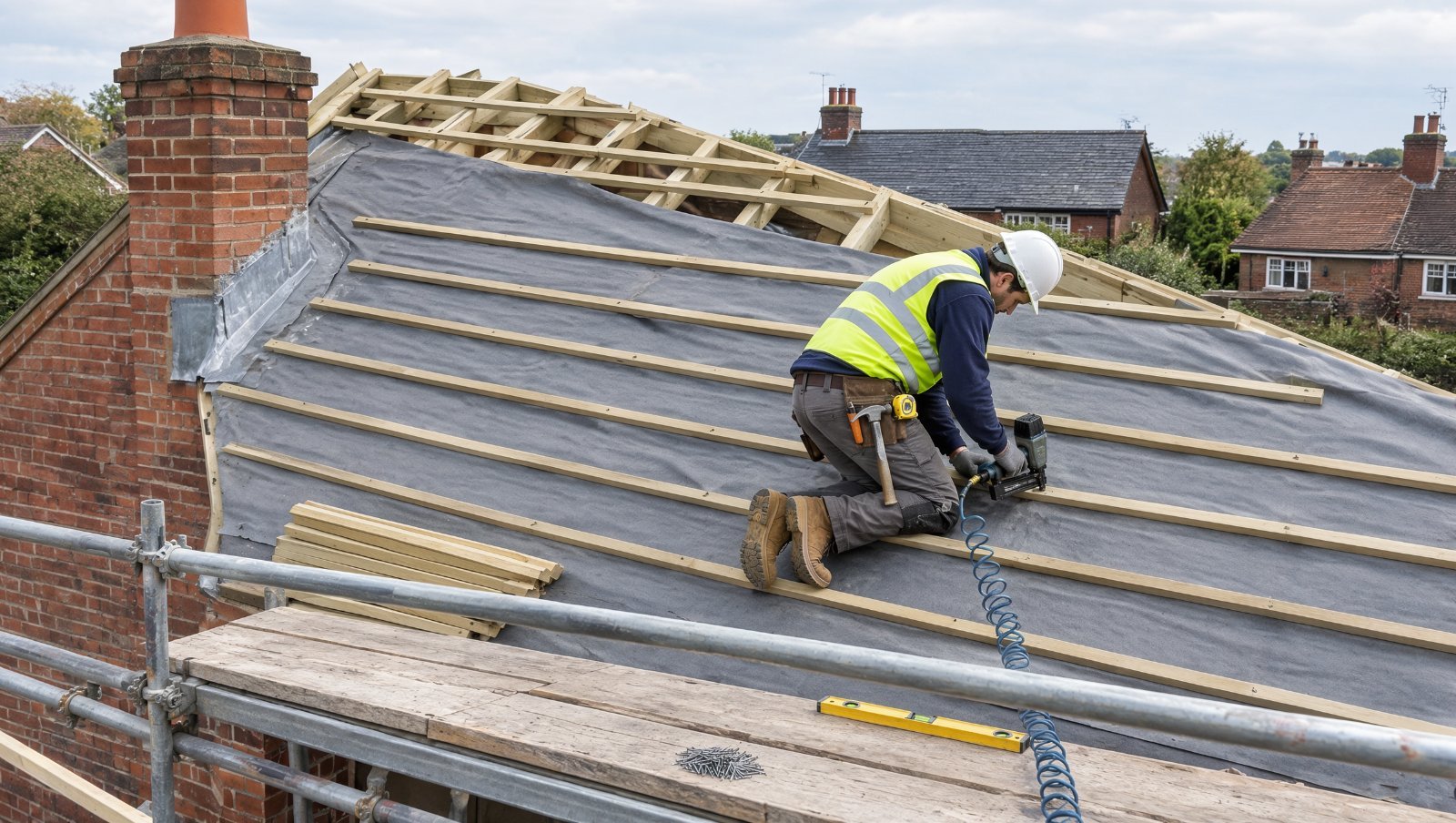
Quick answer: A breathable roof membrane is a waterproof roofing membrane laid over the rafters, under the tiles or slates. It keeps rain and wind out but lets water vapour escape, which cuts condensation and protects the timbers. In the breathable membrane vs felt choice, it has largely replaced old bitumen felt on UK roofs.
Key Takeaways
- Breathable membranes keep water out while letting vapour escape.
- Old bitumen felt does not breathe, so lofts need more ventilation.
- Air-open membranes can reduce or remove the need for extra vents.
- Correct laps, battens and fixing are essential for a watertight result.
A dry, healthy roof starts beneath the tiles. Many older Bristol homes still have traditional bitumen felt, or no underlay at all, which can trap moisture and lead to damp timbers and wet insulation. A modern breathable membrane solves this.
We are Experienced Roofers Ltd, and we provide new roof installation in Whitchurch and across the surrounding areas of Bristol. This guide explains what a breathable roof membrane is, the main types, the pros and cons, and whether your roof needs extra ventilation.
What Is a Breathable Roof Membrane?
A breathable roof membrane, also called a breather membrane or vapour-permeable underlay, is a lightweight sheet laid over the rafters before battens and tiles go on. It is waterproof from the outside but allows water vapour to pass through from inside. Traditional bitumen felt is almost vapour-tight, which is why felted lofts rely on eaves and ridge vents to stay dry.
Breathable Membrane vs Felt: Why It Matters
- Protect roof timbers from moisture and rot
- Reduce condensation in the loft
- Keep insulation dry so it works properly
- Act as a second line of defence if tiles slip or crack
- Are lighter and quicker to fit than bitumen felt
What Types of Roofing Membrane Are There?
The two main types are air-open and air-tight vapour-permeable membranes. Both let vapour out. Air-open membranes also let air pass, which can reduce the need for extra ventilation. Air-tight versions usually rely on eaves and ridge ventilation.
| Type | How it works | Ventilation | Best for |
|---|---|---|---|
| Air-open vapour-permeable | Lets air and vapour pass through | Often no extra vents needed with suitable tiles | Modern, well-insulated roofs, many re-roofs |
| Air-tight vapour-permeable | Lets vapour pass but blocks air | Usually needs eaves or ridge ventilation | Roofs with existing ventilation paths |
| Traditional bitumen felt | Blocks vapour and air | Needs good eaves and ridge ventilation | Older roofs, now rarely used on re-roofs |
Always follow the manufacturer’s guidance and British Standard BS 5250 on condensation control. The right membrane depends on your roof design, insulation and tile type.
What Are the Pros and Cons of Breathable Membranes?
Pros
- Lets moisture from the house escape, which reduces condensation in the loft.
- Lighter and easier to handle than bitumen felt, so it is quicker to fit.
- Stays flexible in cold weather and does not go brittle or sag like old felt.
- Often removes the need for extra eaves or ridge ventilation, when used as the maker intends.
- Helps protect rafters and insulation from damp, which extends the life of the roof.
Cons
- Costs a little more per roll than basic felt.
- Must be laid with the correct laps, battens and counter-battens where needed, or it can flap and leak.
- Some types still need a ventilated air gap, so follow the manufacturer’s guidance.
- Can be damaged by UV if it is left uncovered for too long during a re-roof.
How Long Does a Breathable Membrane Last?
A quality breathable membrane, properly fitted and protected from sunlight under the tiles, can be expected to last for decades, typically in line with the roof covering’s life. Exposure to UV during long delays before tiling can shorten its life.
Do You Need an Air Gap With a Breathable Membrane?
Often not. Many breathable membranes can sit directly on insulation between rafters. With traditional felt, a 50 mm ventilated gap is usually needed. If you are insulating your loft, read our guide on how to insulate a pitched roof.
When Should Your Membrane Be Replaced?
The membrane is usually replaced during a re-roof, as tiles and battens must come off to reach it. Signs you may need attention include damp timbers, wet insulation, torn or perished felt visible in the loft, and condensation dripping from the underside of the roof. See our new roof installation in Whitchurch service or our guide to types of roofing materials.
For independent guidance, see the Planning Portal guidance on work to your roof.
Why Choose Experienced Roofers Ltd?
Our City & Guilds qualified team re-roofs homes across Whitchurch, Bristol and the surrounding areas. We make sure the membrane, insulation, battens and ventilation all work together so your roof stays dry for years. You get a free, fixed-price written quote. See our roofing services in Whitchurch.
Want a professional to take a look? Our team also offers roof repairs in Whitchurch, with a free survey and a fixed written price.
Damp patches on the underside of the membrane are often the first sign of a leak. Our guide on how to fix a leaking roof from the inside explains how to trace and patch them from the loft.
Frequently Asked Questions
Is a breathable roof membrane waterproof?
Yes. It blocks rain, snow and wind from outside while letting water vapour escape from inside.
What is the best breathable membrane for a roof?
It depends on the roof design, ventilation and tiles. Choose a product from an established UK manufacturer that suits your roof, and have it fitted to the maker’s guidance.
Can a breathable membrane be fitted without removing the tiles?
Not properly. It goes over the rafters under the battens, so the tiles must come off. Fixing membrane from inside the loft is not an effective substitute.
Does a breathable membrane need ventilation?
Air-open membranes often do not, when used with suitable tiles. Air-tight membranes usually need eaves or ridge vents. Follow the manufacturer’s guidance.
Why is there condensation in my loft?
Usually because warm, moist air from the house meets a cold roof with poor ventilation or vapour-tight felt. Better ventilation or a breathable membrane at re-roofing can help.
Planning a Re-Roof?
We use quality breathable membranes on every re-roof and explain exactly what ventilation your roof needs. You will get a full written specification with your quote. Call 0117 345 9991 or book a survey. See our new roof installation in Whitchurch page and our roofers in Whitchurch.

Phillip Holland is the founder of Experienced Roofers Ltd, bringing 30 years of roofing and construction expertise to homeowners across Wiltshire. A certified roofer who has overseen hundreds of projects, Phillip writes to demystify roofing problems, covering everything from spotting early leak damage to choosing the right roofing material and knowing when it’s time to call a professional.