
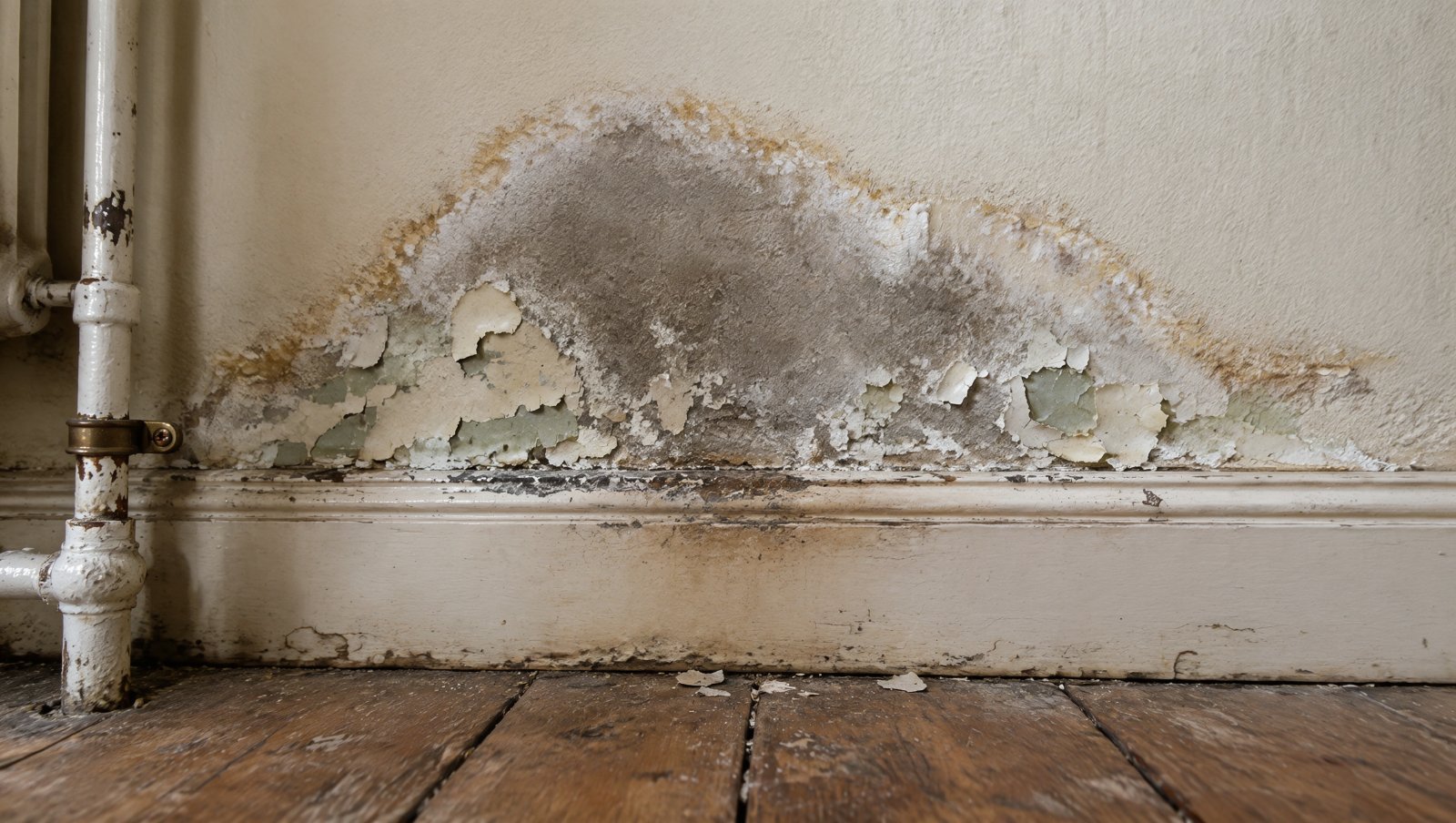
Quick answer: In rising damp vs penetrating damp, the difference is direction. Rising damp comes up from the ground, stays below about a metre and leaves a tide mark near the skirting. Penetrating damp comes in sideways through faults like slipped tiles, blocked gutters or failed pointing. It can appear at any height.
Key Takeaways
- Rising damp is low, even and salty. Penetrating damp is patchy and linked to rain.
- Rising damp is fixed by restoring the damp-proof course. Penetrating damp is fixed by sealing the outside fault.
- Treating one like the other wastes money and the damp comes back.
- Never paint over a damp patch without fixing the cause.
A damp patch is a warning that moisture is getting in where it should not. Left alone, it leads to mould, poor air quality, rotting timber and crumbling plaster. The tricky part is that two very different problems can look almost the same on a wall.
We are Experienced Roofers Ltd, and we carry out damp proofing in Whitchurch and across the surrounding areas of Bristol. This guide shows you how to tell rising damp and penetrating damp apart, how each is fixed, and when to get a professional opinion.
Rising Damp vs Penetrating Damp: What Is the Difference?
The difference is the direction the water travels. Rising damp moves upwards from the ground through the wall by capillary action. Penetrating damp moves sideways into the building from outside, through a defect in the roof, walls, gutters or windows.
| Feature | Rising damp | Penetrating damp |
|---|---|---|
| Direction | Upwards from the ground | Sideways from outside |
| Height | Usually below 1 metre | Any height, including ceilings |
| Floors affected | Ground floor only | Any floor |
| Typical sign | Tide mark and white salts near skirting | Irregular patch that grows after rain |
| Usual cause | Missing, failed or bridged damp-proof course | Roof, gutter, pointing, render or window fault |
| Main fix | Restore the DPC and re-plaster | Find and seal the outside defect |
What Is Rising Damp, and What Are the Signs of Rising Damp?
Rising damp shows as a horizontal band of staining near the skirting, usually below one metre. Look for a tide mark, white salt deposits, peeling paint at floor level, soft or hollow plaster, damp skirting boards and a musty smell that is strongest near the floor.
- A horizontal tide mark near the skirting
- Paint or wallpaper peeling close to floor level
- Plaster that feels soft or sounds hollow
- White, chalky salt deposits on the wall surface
- A musty smell that is stronger near the floor
- Skirting boards that feel damp or have warped
One sign alone does not prove much. Two or three together usually point to rising damp. It is most common in older homes built without a damp-proof course (DPC), or where the DPC has failed or been bridged.
How Do You Fix Rising Damp?
Fix rising damp in this order: restore the damp-proof course, remove anything bridging it, strip and replace salt-contaminated plaster, then improve sub-floor ventilation. Redecorating before the cause is fixed means doing the work twice.
- Restore the damp-proof course. A chemical DPC injection is the most common method. Walls in poor condition may need a physical membrane instead.
- Remove bridging. Paths, flower beds, soil or render that sit above the DPC let moisture bypass it. Lower or clear them.
- Re-plaster. Old plaster holds salts that keep pulling in moisture. Strip it and replace it with a salt-resistant plaster, then let it dry before decorating.
- Improve airflow. Clear blocked air bricks or add more, so moisture under suspended floors can escape.
On older Bristol homes with solid brick or Pennant stone walls, a breathable approach with lime plaster is often better than sealing the wall with cement products.
What Is Penetrating Damp, and How Do You Spot It?
Penetrating damp appears wherever water gets in, at any height. Look for patches with sharp, irregular edges around rooflines, chimney breasts and windows. They usually get darker or bigger after rain, and often line up with a visible fault outside, like a missing tile or overflowing gutter.
- Damp patches at any height, often near ceilings, chimney breasts or windows
- Patches with sharp, irregular edges
- Staining that darkens or spreads after rainfall
- Outside damage nearby, such as cracked render or a missing tile
- Mould in one tight area rather than across the whole wall
- One patch that feels damp when the rest of the wall is dry
Bristol’s wet, windy weather drives rain hard against exposed walls and roofs, so penetrating damp is very common here, especially on gable ends and around chimneys.
How Do You Fix Penetrating Damp?
Fixing penetrating damp means finding and sealing the outside fault, not treating the wall itself. Trace the patch to its source, then repair the roof, gutters, pointing or window seals as needed. Once the entry point is closed, the wall can dry out.
- Find the entry point. Check the roof, outside walls, window surrounds and nearby pipes until you find the defect.
- Repair the roof. Slipped or missing tiles and failed chimney flashing are common culprits. Our lead work in Whitchurch cover flashing repairs.
- Clear and repair gutters. Blocked or broken gutters pour water down the wall. See our fascia, soffit and gutter services in Whitchurch.
- Repoint worn brickwork. Eroded mortar lets water straight in. Read our guide to repointing costs in Bristol.
- Reseal windows and doors. Replace perished seals and check sills slope away from the wall.
- Consider a breathable masonry coating. It keeps rain out while letting trapped moisture escape.
How Much Does It Cost to Fix Damp?
Costs depend on the type and extent of damp. A chemical DPC is priced per linear metre, typically £60 to £120. Re-plastering is priced by area. Roof and gutter repairs range from small fixes to larger flashing work. Gutter cleaning and repairs are usually among the cheapest jobs.
The price goes up with how far the damage has spread, how large the area is, how hard it is to reach and whether your walls are standard brick or older solid stone. For a full breakdown, see our guide to damp proofing costs in Bristol.
How Can You Prevent Damp Coming Back?
Most damp is cheaper to prevent than fix. Clear gutters twice a year, check your roof for slipped tiles, keep ground levels below the DPC, keep air moving indoors and under floors, fix small cracks in render and pointing quickly, and book a damp check every few years on older homes.
- Clear gutters and downpipes at least twice a year
- Check the roof for slipped, cracked or missing tiles
- Keep paths and flower beds below the damp-proof course
- Keep air moving indoors and under suspended floors
- Repair small cracks in render or pointing straight away
- Book a professional damp inspection every few years
When Should You Call a Professional?
Call a professional if simple fixes have not worked, the damage covers a large area, there are signs of structural problems like rotten timber or sagging floors, or the property has a history of damp. Older homes often have more than one cause at once.
Our City & Guilds qualified team finds the real cause before recommending any work. Find out more about our damp proofing in Whitchurch service.
Want a professional to take a look? Our team also offers roof repairs in Whitchurch, with a free survey and a fixed written price.
For independent guidance, see the Property Care Association advice on rising damp.
Frequently Asked Questions
Can rising damp go higher than a metre?
Rarely in modern walls, because gravity overcomes capillary action. In solid stone or older brick walls it can occasionally climb a little higher, which is why period homes need careful diagnosis.
Will my insurance cover penetrating damp?
Sometimes, if a sudden event like storm damage caused it. Damage that built up slowly, such as from gutters left blocked for years, is usually excluded. Check your policy.
How long does a treated wall take to dry?
Usually several weeks to a few months, depending on wall thickness and material. Solid stone walls take longer than standard brick.
Can I just paint over a damp patch?
No. Painting over damp traps moisture behind the paint and makes the damage worse, even if it looks fine for a few weeks.
Is condensation the same as damp?
Condensation is a third type of damp. It forms when warm, moist indoor air meets a cold surface, often causing black mould around windows. It is fixed with better ventilation and heating, not a DPC.
Still Unsure Which Damp You Are Dealing With?
Send us a photo of the patch and tell us where it is in the house. Often that is enough for a first view, and we will suggest whether a visit is needed. Call 0117 345 9991 or get in touch. Read about our damp proofing in Whitchurch service or our roofers in Whitchurch.

Phillip Holland is the founder of Experienced Roofers Ltd, bringing 30 years of roofing and construction expertise to homeowners across Wiltshire. A certified roofer who has overseen hundreds of projects, Phillip writes to demystify roofing problems, covering everything from spotting early leak damage to choosing the right roofing material and knowing when it’s time to call a professional.