
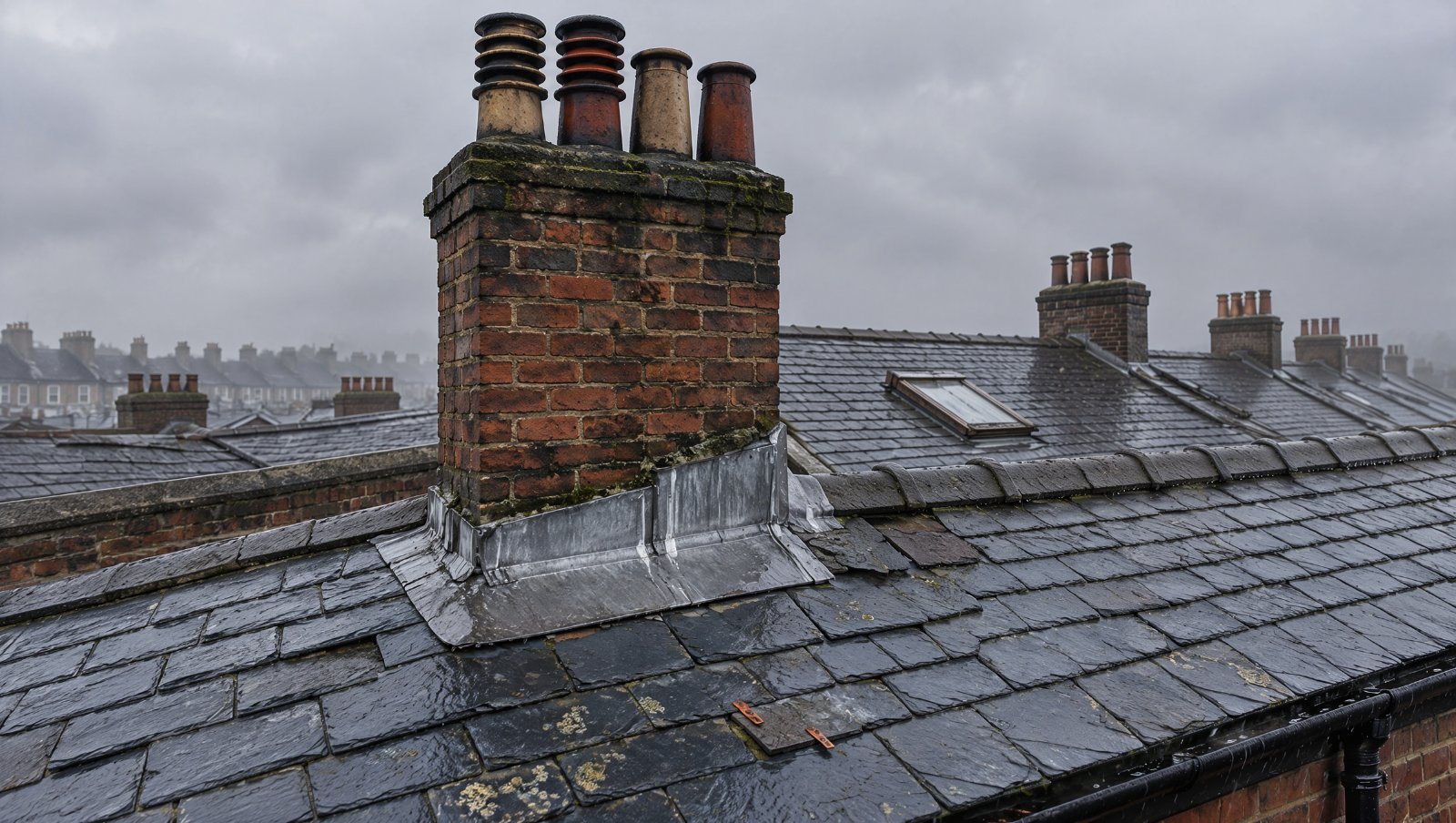
Quick answer: Here is how to fix a chimney leak. First find where the water gets in. A leaking chimney is usually caused by failed chimney flashing, cracked mortar or bricks, a damaged crown or a missing cap. Fix the flashing, repoint the brickwork, seal or rebuild the crown and cap unused flues.
Key Takeaways
- Flashing failure is the most common cause of chimney leaks.
- Rain can also get in through cracked mortar, a broken crown or an uncapped flue.
- Only use breathable treatments on chimney brickwork.
- Chimney work is at height, so most repairs need a professional.
A leaking chimney can quietly damage your home. Damp patches on the chimney breast, mould, wet insulation and rotting roof timbers can all follow. Small leaks get worse quickly, especially in Bristol’s wet, windy winters.
We are Experienced Roofers Ltd, and we carry out lead work in Whitchurch and across the surrounding areas of Bristol. This guide explains what causes chimney leaks, how they are fixed step by step and when to call a professional.
Why Is My Chimney Leaking?
The four most common causes are damaged or missing flashing, cracked mortar or bricks, a faulty chimney crown or cap, and blocked gutters near the chimney. Each one lets water reach the brickwork or flue and track into your home.
- Damaged flashing. The lead or metal strip sealing the chimney to the roof can crack, lift or come loose.
- Cracked mortar or bricks. Frost, weather and age erode joints and crack bricks.
- Faulty crown or cap. A cracked crown or missing cap lets rain run straight down the flue.
- Blocked gutters nearby. Overflowing gutters can push water towards the base of the chimney.
How to Fix a Chimney Leak Step by Step
Inspect the chimney, clean it, repair the flashing, repoint or replace damaged brickwork, repair or fit a cap, check nearby gutters and roof, then apply a breathable waterproofing treatment if needed. Fix the actual cause, not just the symptom.
Step 1: Inspect the chimney inside and out
Start inside. Look at the chimney breast in each room and in the loft for damp patches, brown staining or flaking plaster. Note whether the damp is high up near the roof line, which points to flashing, or spread down the breast, which points to porous brickwork or rain coming down the flue. Outside, use binoculars from the ground to check the crown, pots, pointing and flashing. Look for gaps where the lead meets the brick, cracked mortar and missing pots or cowls. Do not climb onto the roof unless you have proper access and experience.
Step 2: Clean the chimney and roof around it
Moss, leaves and dirt hide cracks and stop any sealant or mortar from bonding. Brush the stack and the tiles around its base, and clear the back gutter, the small gutter behind the chimney, which often fills with debris and overflows under the tiles. Once it is clean, look again. Hairline cracks in the crown and open joints in the brickwork are much easier to see on a clean surface.
Step 3: Fix chimney flashing
Flashing is the lead that seals the joint between the chimney and the roof, and it is the most common cause of a leaking chimney. Small gaps where the lead has pulled out of the mortar joint can be refixed with lead wedges and sealed with a lead-compatible sealant as a short-term fix. If the lead is split, thin, lifted or has been patched with tape before, it needs replacing. New stepped flashing and a front apron are cut and dressed to fit, then chased 25 mm into the mortar joints and pointed in. Our lead work in Whitchurch covers chimney flashing repairs.
Step 4: Repoint or replace brickwork
Rake out loose and crumbling mortar to a depth of about 15 to 20 mm, brush out the dust and dampen the joints. Repoint with a mortar that suits the bricks. On older Bristol homes with soft bricks, that is usually a lime mortar, because hard cement mortar traps water and makes the bricks spall. Replace any bricks that have cracked or lost their face. Read our chimney stack repointing guide for the full process.
Step 5: Repair the crown or fit a cap
The crown is the mortar or concrete top around the pots. Fine cracks can be sealed with a flexible crown repair compound. If the crown is broken up or the pots are loose, it needs rebuilding with a slight slope so water runs off. Fit a rain cap or vented cowl to any flue you no longer use. This stops rain pouring straight down the chimney while still letting air move through, which helps prevent damp inside the breast.
Step 6: Check nearby gutters and roof
Sometimes the chimney gets the blame for a leak that starts nearby. Check the tiles or slates around the base for cracks or slips, and make sure the valleys and gutters below are clear. A blocked gutter can push water back under the roof edge and down the inside of the wall. See how often gutters should be cleaned.
Step 7: Apply a breathable water repellent
Once all repairs are done and the brickwork has had a week or two to dry, you can apply a breathable masonry water repellent. It soaks into the brick and helps rain run off while still letting moisture escape. Avoid paints, sealers or bitumen coatings that form a skin. They trap moisture inside the stack and can make the problem worse over a few winters.
How Do You Tell an Internal Leak From an External One?
An internal sign is damp on the chimney breast, ceiling or loft timbers near the stack. External signs are cracked or lifted flashing, eroded mortar, a cracked crown or water staining on the outside of the chimney. Usually you will see both, which helps pinpoint the cause.
When Should You Call a Professional?
Call a professional for chimneys on two-storey or taller homes, unsafe roof access, extensive brick or mortar damage, leaks that continue after DIY repairs, or chimneys shared with neighbours. Working at height needs proper access equipment.
Our City & Guilds qualified team repairs chimney leaks across Whitchurch, Bristol and the surrounding areas. For prices, see our guide to chimney repair costs in Bristol.
How Can You Prevent Chimney Leaks?
Have your chimney checked every year or two, keep gutters clear, cap unused flues, repoint before mortar fails and replace lifted flashing early. Small, regular maintenance prevents bigger leaks.
Want a professional to take a look? Our team also offers roof repairs in Whitchurch, with a free survey and a fixed written price.
For independent guidance, see the NFRC guide to finding a roofing contractor.
If water is already reaching the loft around the chimney, our guide on how to fix a leaking roof from the inside shows how to contain it until the flashing can be repaired outside.
Frequently Asked Questions
Can I fix a chimney leak myself?
Small flashing gaps on a low, easy-to-reach chimney may be possible for experienced DIYers. Most chimneys are high and need scaffolding, so we recommend a professional.
How much does chimney leak repair cost?
It depends on the cause and access. Small sealant repairs are cheap. Flashing replacement usually costs £550 to £1,100 before scaffolding. See our chimney repair cost guide.
Does a leaking chimney affect insulation?
Yes. Water soaks insulation around the chimney, reduces its performance and can lead to mould.
How long do chimney repairs last?
Good flashing and repointing can last 20 years or more. Sealant-only fixes may last just a few years.
Can condensation in a flue cause damp?
Yes. Unvented or blocked flues can trap condensation that shows as damp on the chimney breast. A vented cap or cowl helps.
Water Coming Through Near the Chimney?
Tell us where the stain is and when it appears. That alone often points to the cause. We will check the flashing, brickwork and crown together, so you only pay to fix it once. Ring 0117 345 9991 or book a chimney check. Read more about our lead work in Whitchurch or our roofers in Whitchurch.

Phillip Holland is the founder of Experienced Roofers Ltd, bringing 30 years of roofing and construction expertise to homeowners across Wiltshire. A certified roofer who has overseen hundreds of projects, Phillip writes to demystify roofing problems, covering everything from spotting early leak damage to choosing the right roofing material and knowing when it’s time to call a professional.