
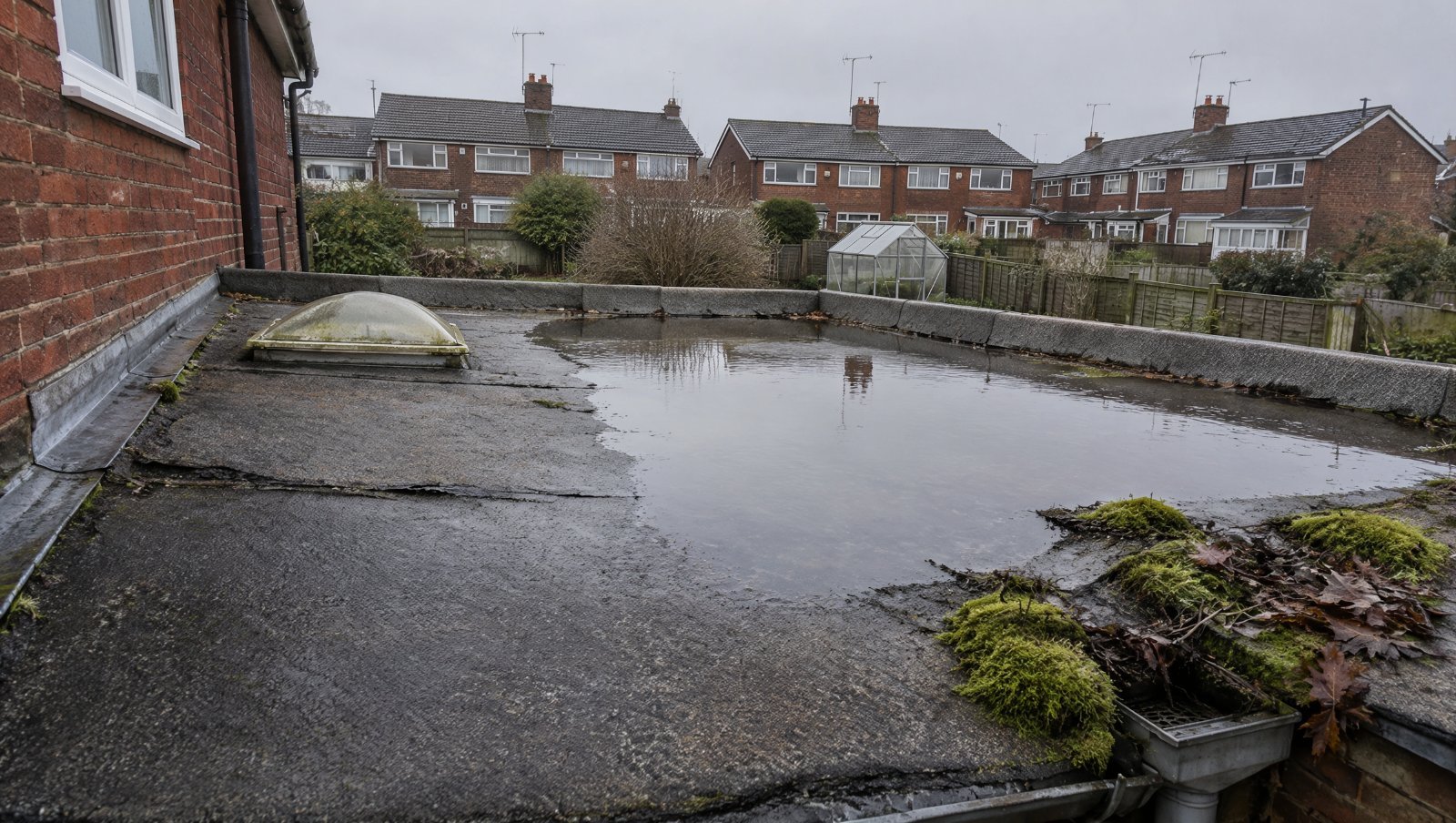
Quick answer: The most common flat roof problems are leaks, flat roof ponding, flat roof blistering, cracks, sagging, moss build-up and punctures. They are usually caused by age, heavy rain, poor drainage, bodged repairs or lack of maintenance. Checking your flat roof twice a year and keeping outlets clear prevents most flat roof problems.
Key Takeaways
- Ponding water is one of the biggest causes of flat roof failure.
- Blisters, cracks and splits are early signs the covering is wearing out.
- Poor past repairs often cause repeat leaks.
- Inspect flat roofs in spring and autumn, and after storms.
Flat roofs are common on extensions, garages, porches and dormers across Bristol, from 1930s semis in Whitchurch and Hengrove to Victorian terraces with rear additions in Knowle and Brislington. They are practical but need more care than pitched roofs.
We are Experienced Roofers Ltd, and we install flat roofing in Whitchurch and across the surrounding areas of Bristol. This guide covers the most common flat roof problems, the early warning signs and how to prevent them.
Why Are Flat Roof Problems Common in Bristol?
Bristol’s frequent heavy rain and strong winds wear flat roofs down faster. Many local homes have older extensions with dated felt roofs, and patch repairs done badly in the past often lead to recurring leaks. Lack of regular maintenance lets blocked outlets and small cracks grow into bigger problems.
What Are the Most Common Flat Roof Problems?
The six most common problems are leaks, ponding water, cracks and blisters, sagging, debris and moss build-up, and punctures.
- Leaks and water damage. Water gets through worn seams, splits or flashing and causes damp inside.
- Ponding water. Water sitting for more than 48 hours slowly damages the surface and finds weak spots.
- Cracks and blisters. Age, sun and trapped moisture make the covering crack or bubble.
- Sagging. Water, debris or rotten decking can make the roof dip, which makes ponding worse.
- Debris and moss. Leaves and moss block outlets and hold moisture on the roof.
- Punctures. Dropped tools, branches or foot traffic can pierce the membrane.
What Are the Early Warning Signs?
Inside, look for ceiling stains, damp patches, peeling paint or mould below the flat roof. Outside, look for cracks, blisters, sagging areas, debris and water that does not drain within a couple of days of rain.
- Inside: water stains, damp patches, peeling paint, mould or a musty smell.
- Outside: cracks, splits, bubbles, dips, moss, blocked outlets or standing water.
Ignoring small signs leads to bigger leaks, rotten decking and, eventually, full replacement.
How Can You Prevent Flat Roof Problems?
Keep the roof clear of debris, inspect it in spring and autumn and after storms, keep outlets, gutters and downpipes clear, and fix small cracks or splits quickly.
- Remove leaves, twigs and moss regularly.
- Inspect twice a year and after storms. See our seasonal roof maintenance guide.
- Keep outlets, gutters and downpipes clear.
- Repair cracks, blisters and lifted edges early.
- Avoid walking on the roof unless it is designed for it.
Which Flat Roof Material Has the Fewest Problems?
Modern GRP fibreglass and EPDM rubber roofs have far fewer problems than traditional felt. They are seamless or near-seamless, handle temperature changes better and last 20 to 40 years. Read our guide to the best flat roof material in the UK.
When Should You Call a Flat Roofing Specialist?
Call a specialist if you have persistent leaks, sagging, large cracks, water that will not drain, or damaged flashing and edges. Do not walk on a weak or uneven flat roof, as damaged areas can give way. Read about flat roof leak repair or see prices in our flat roof replacement cost guide.
Our City & Guilds qualified team repairs and replaces flat roofs across Whitchurch, Bristol and the surrounding areas. See our flat roofing services in Whitchurch.
Want a professional to take a look? Our team also offers roof repairs in Whitchurch, with a free survey and a fixed written price.
For independent guidance, see the NFRC guide to finding a roofing contractor.
Once you know which problem you have, our guide on how to fix a flat roof walks through the repair for each type of covering.
Frequently Asked Questions
How much does it cost to fix flat roof problems?
Small repairs like clearing outlets or sealing a crack are cheap. Large cracks, sagging or membrane repairs cost more, and widespread damage may mean replacement.
How can I tell if my flat roof is leaking?
Look for damp patches, stains, drips or mould on ceilings and walls below. On the roof, look for cracks, pooling water and damaged flashing.
How often should I inspect my flat roof?
At least twice a year, in spring and autumn, plus after major storms.
Can regular maintenance prevent flat roof problems?
Yes. Clearing debris, checking drainage and fixing small issues early greatly extends a flat roof’s life.
Is ponding water always a problem?
Small puddles that dry within 48 hours are normal. Water that sits longer than that is a sign of poor falls or sagging and should be checked.
Spotted One of These Problems?
Most flat roof problems are cheaper to sort early. We will check the covering, the deck and the drainage, and tell you honestly whether a repair will last. Call 0117 345 9991 or book a flat roof check. See our flat roofing in Whitchurch page and our roofers in Whitchurch.

Phillip Holland is the founder of Experienced Roofers Ltd, bringing 30 years of roofing and construction expertise to homeowners across Wiltshire. A certified roofer who has overseen hundreds of projects, Phillip writes to demystify roofing problems, covering everything from spotting early leak damage to choosing the right roofing material and knowing when it’s time to call a professional.