
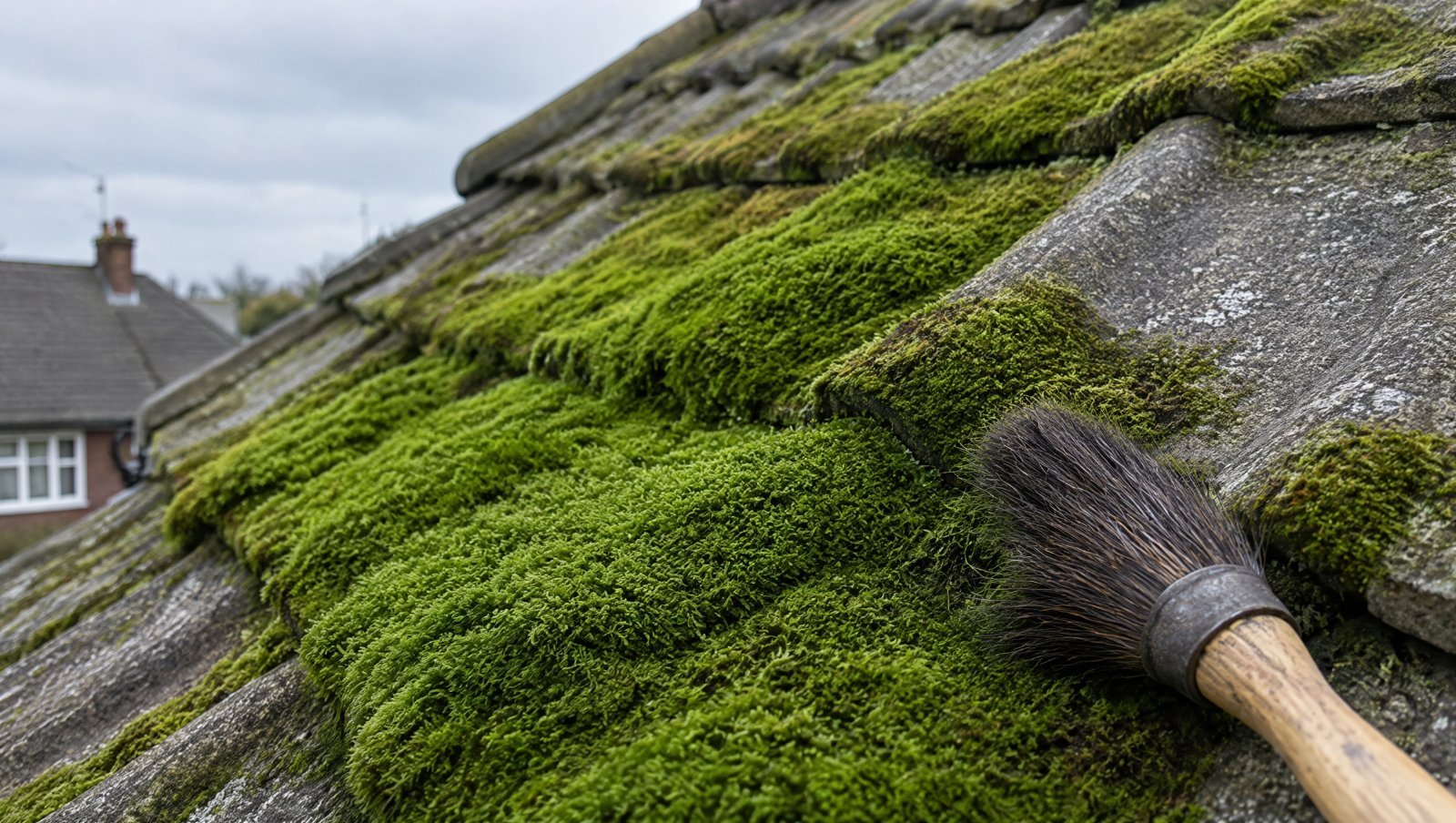
Quick answer: Here is how to clean moss off a roof safely. Choose a dry day and gently brush the loose moss off from top to bottom. Apply a roof-safe moss killer to kill the roots and spores, let it work, then rinse gently only if the label says so. Clear the gutters afterwards, and never pressure wash roof tiles.
Key Takeaways
- Moss holds water against tiles, which can lead to cracks, lifted tiles and leaks.
- Pressure washing damages tiles and can force water into the loft.
- A moss killer stops regrowth by killing roots and spores.
- Always clear gutters after removing moss, as it washes straight into them.
Moss is a common sight on Bristol roofs. The city’s mild, damp climate and plenty of shaded, tree-lined streets give it ideal growing conditions, especially on north-facing roofs. It may look harmless, but it slowly damages your tiles.
We are Experienced Roofers Ltd, and we carry out roof repairs in Whitchurch and across the surrounding areas of Bristol. This guide shows you how to remove moss from your roof safely, what mistakes to avoid and how to stop it coming back.
Why Is Moss Bad for Your Roof?
Moss acts like a sponge. It holds moisture against the tiles, which can cause cracking, lifting and leaks. In winter, trapped water freezes and expands, making damage worse. Moss also washes into gutters and blocks them, causing overflows and damp walls.
If you are wondering how to remove moss from roof tiles without damaging them, the key is to work gently. Brush by hand from the top down, treat the roots and never use a pressure washer.
How to Clean Moss Off a Roof Step by Step
Follow six steps: get safe access, brush off loose moss, apply a moss killer, let it work, rinse gently if needed and clear the gutters. Work slowly and gently to protect the tiles.
Step 1: Put safety first
Most moss can be treated without going onto the roof. Work from a sturdy ladder with a stand-off, wear non-slip shoes, gloves and eye protection, and never work alone. Do not walk on concrete or clay tiles, as they crack easily, and avoid the roof completely in wet, icy or windy weather. If the roof is steep or two storeys high, use a professional with scaffolding or a cherry picker. See HSE advice on working at height.
Step 2: Remove loose moss
Wait for a dry spell, when moss is light and comes away easily. Use a stiff brush, a long-handled broom or a plastic scraper, and always work from the top of the roof down, in the direction the tiles overlap. Working upwards lifts the tiles and lets water in. For thick clumps, ease them off with a small trowel rather than pulling. Bag the moss as you go, so it does not end up in the gutters or blow onto the lawn.
Step 3: Apply a moss killer for roofs
Choose a moss killer that says it is safe for roofs and your tile type. Mix it as the label says and apply it with a garden pressure sprayer, covering every tile evenly, including the spots where moss was thickest. The treatment kills the roots and spores you cannot see, which is what stops it coming back quickly. Cover plants, ponds, patios and garden furniture first, and keep children and pets away until it is dry.
Step 4: Let the treatment work
Read the label for timings. Some products work within hours, while others keep working for weeks as rain washes them in. Leave the moss to die off and turn brown before you do anything else. Remaining dead moss will often loosen and wash off on its own over the following months. Avoid rinsing too soon, or you will wash the treatment away before it has done its job.
Step 5: Rinse gently if required
Only rinse if the product says to. Use a normal garden hose at low pressure, working from the top of the roof down so the water flows over the tiles and into the gutters. Never use a pressure washer. It strips the surface off concrete tiles, damages the pointing on ridges and can force water up under the tiles and into the loft.
Step 6: Clear the gutters
Moss and grit from the roof end up in the gutters, and blocked gutters cause overflowing water and damp walls. Once the roof is done, scoop out the debris, flush the gutters with a hose and check the downpipes run freely. Do this again a few months later, as dead moss keeps washing down. Read how often gutters should be cleaned.
What Mistakes Should You Avoid?
The biggest mistakes are pressure washing, scrubbing too hard, using harsh chemicals and leaving moss to spread. Each can damage tiles or cause leaks.
- Pressure washing. High pressure strips the tile surface, can crack tiles and forces water under them.
- Scrubbing too hard. Heavy force wears the tile surface and can loosen tiles.
- Harsh chemicals. Strong products can damage tiles and harm plants and wildlife.
- Ignoring it. Moss spreads quickly and becomes harder and dearer to remove.
How Do You Stop Moss Coming Back?
Trim overhanging branches to let in more sun, keep gutters clear, treat new growth early and check the roof once or twice a year. Some homeowners also fit zinc or copper strips at the ridge, which can slow moss regrowth.
- Cut back trees that shade the roof.
- Keep gutters and downpipes clear so water drains away.
- Treat moss as soon as you see it.
- Work on cool, cloudy days so moss killer does not dry too fast.
- Check the roof once or twice a year. Our seasonal roof maintenance guide explains what to look for.
When Should You Book Professional Roof Moss Removal?
Call a professional if the roof is high or steep, heavily covered in moss, or if you notice cracked or slipped tiles. A roofer can remove moss safely, treat the roof, clear gutters and repair any damage found. Our City & Guilds qualified team covers Whitchurch, Bristol and the surrounding areas. See our roofing services in Whitchurch.
Frequently Asked Questions
How often should moss be cleaned off a roof?
Check your roof once a year. Most homes need moss treating every one to three years, depending on shade and moisture.
Is it safe to pressure wash a roof?
No. Pressure washing can crack tiles, strip their surface and force water under them, leading to leaks.
How long does moss killer take to work?
It starts working within hours, but full results can take days or weeks. Rain gradually washes away the dead moss.
How do professionals remove roof moss?
They remove moss by hand with safe tools, apply a roof-safe biocide, sometimes use low-pressure soft washing, clear gutters and check for damaged tiles.
Does moss mean my roof needs replacing?
Not usually. Moss on its own is a maintenance issue. But if it has caused cracked or slipped tiles, those will need repairing. See our guide to roof repair costs.
Moss Too Thick to Tackle Safely?
We remove moss by hand and treat the roof without pressure washing, then check for cracked or slipped tiles at the same time. Call 0117 345 9991 or send us a photo for a price. See our roof repairs in Whitchurch page and our roofers in Whitchurch.

Phillip Holland is the founder of Experienced Roofers Ltd, bringing 30 years of roofing and construction expertise to homeowners across Wiltshire. A certified roofer who has overseen hundreds of projects, Phillip writes to demystify roofing problems, covering everything from spotting early leak damage to choosing the right roofing material and knowing when it’s time to call a professional.